
Private tailor-made journeys of a life time

(+84) 942777545
sales@vietnamescapetours.com
Need Help?
Private tailor-made journeys of a life time
Sep 8, 2023
By Ms. Anh Thu
Overview
What is lucky money in Vietnam? Vietnamese people, particularly children, cherish the tradition of receiving Li Xi, or lucky money, during the traditional Tet Holiday. This cultural event, associated with various traditions and customs, is the most important holiday in Vietnamese culture. The tradition of giving and receiving lucky money during the Tet Holiday is one of the most essential parts of what it means to be Vietnamese during the Lunar New Year Festival. Being indulge in the Vietnamese tradition in your trip to Vietnam, read on to explore more about this one-of-a-kind activity!

To answer the question what is lucky money in Vietnam?, we first learn more about the Vietnamese Lunar New Year. Vietnamese Tet, also known as Tet Nguyen Dan, is the most significant festival in Vietnamese culture, marking the beginning of the lunar calendar. It symbolizes love, hope, family, and friend kinship, and promises a better year ahead. The Lunar New Year, or Tet, usually arrives around late January or early February and is the time for Vietnamese family reunions. The first three days of the springtime new year are celebrated by everyone, while others may celebrate for an entire week. Traditional customs are practiced, including honoring ancestors' spirits, visiting relatives and friends, and giving lucky money, or "Li Xi," to children and elders. To fully understand Vietnamese New Year customs, visitors should learn about "Li Xi" as they are the most important festival in Vietnamese culture.
Lucky Money, also known as "Li Xi" in Vietnamese, is a traditional Vietnamese gift given to children and the elderly during the Lunar New Year. Originating from the Chinese words 利市 (lìshì) and 紅包 (hóngbāo) in Chinese which means "lucky" and "red envelope respectively," it is a small amount of money placed in a red envelope, symbolizing growth and success. The "Lucky Money" inside is a new brand with low face value.
A legend says that, once upon a time, there were evil spirits living in tree hollows who wanted to harm children but were prevented by the gods. On New Year's Eve, the gods had to return to heaven to accept new tasks. The evil spirits would come out at night, robbing children's heads and making them scream and feverish. Parents had to stay awake all night to care for their children. An old couple, who had a son, were scared of the evil spirits. When several gods passed by, they helped them protect their son by turning themselves into bronze coins and placing them under the child's pillow. The evil spirits were scared of the twinkling light from the coins and could not harm the baby. The good story spread quickly, leading to people giving lucky money to children as a way to express love and affection. This tradition continues to this day.
According to another tale, the "Li Xi" custom, believed to have originated in China's Tang dynasty, involves a prince's birth and the King giving him gold and silver in a red cover as a lucky charm. Although there is no scientific evidence to prove its effectiveness, it is believed to bring happiness to recipients, both in ancient times and in modern times.
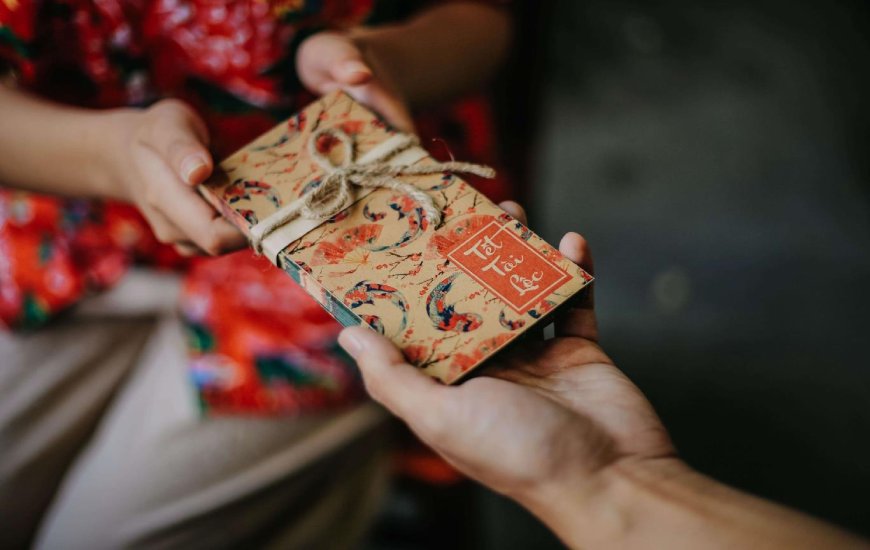
After knowing what is lucky money in Vietnam, let’s learn about its meaning. Li Xi, a traditional Vietnamese tradition, involves giving money to welcome the new year on the first day of the Lunar New Year. "Li Xi" is often associated with giving money to children on the first day of the Lunar New Year to welcome the new age. The "Li xi" tradition in Vietnam continues today, with a red envelope expressing hope for children to eat more, grow rapidly, study well, and have a delightful year ahead. This small amount can bring good fortune to the upcoming year and can last until the 9th or 10th day of the Tet Festival.
The red envelope, which holds the money, symbolizes good fortune, wealth, and a beneficial year, and wards off evil spirits since red is considered the luckiest color in Vietnamese belief. Red is often seen in traditional festivals, symbolizing prosperity and great luck. Thus Vietnamese believe the red li xi will bring happiness and wealth throughout the year. The red envelope, also known as "Li Xi," symbolizes secrecy and privacy. Adults want children to see it as a wish for luck and good things in the new year. The more "Li Xi" a person gives or receives, the more flukes they will gain during the new year. The envelope keeps the amount secret to prevent jealousy among children and avoid unnecessary conflict.
In the past, a small "Li Xi" was a significant morale booster for adults working hard for food and clothing. Children considered this as their valuable treasures, spending it on necessities they could not have in normal days. Today, children have better living conditions, but their excitement to receive "Li Xi" remains. Modern parents educate their children to manage their "Li Xi" appropriately, with some keeping a small amount for toys, and tuition fees, or giving it to charity to help poor children.
Nowadays, Lucky money is given to both children and elders in a family, as it demonstrates care for their health and longevity. Growing-ups give "Li Xi" to their parents, ensuring good health and a longer life for grandparents and parents. Elders also feel happy when receiving lucky money from their children, as it signifies stable jobs for their children, and they are grateful for the money's value. Over the past years, the "Li Xi" can be sent to anyone, young or old, as people believe that giving out more luck brings more good luck. More businesses are using red envelopes with money as traditional thanks to their valued customers, not only as a wish for a lucky new year but also as a way to conserve an ancient tradition.
Lunar New Year is a time of celebration and tradition where people wear beautiful clothes and visit relatives and friends to wish for health, happiness, and prosperity. They then give "lì xì" (lucky money) to children, who are now given to anyone, young or old, believing that the more "Li Xi" they give, the more luck they get back.
Lucky money is wrapped in red envelopes with New Year's wishes, and the recipient must bring new notes to show respect. The older currency is often considered unlucky, and new money in Tet Holiday is considered the start of a new year and adventure.
Middle-aged people put current VND in the "Li Xi" as a practical gift, while younger people choose lucky money that has not been spent immediately but is kept as an amulet of luck. Some choose 10,000 VND cotton notes, while others prefer foreign currency with small notes and nice series numbers. In terms of money value, many people want to put in a larger amount, as wealthier people are said to have more manners. Lucky Money is also seen as a way to express kindness and social status.
When giving lucky money to others, the giver often includes best wishes for their beloved receivers. For young children, people will wish them a new year of good health, studying well, and being diligent. For the elderly, people will include wishes for good health, long life, and happiness with their children and family. For business people, the wisher will wish them a lucky new year, money comes in like water.

In Vietnam culture, when receiving "Li Xi," use both hands with a happy face and avoid opening the envelope to see the amount, as this is rude. In return, after receiving lucky money, sincerely thank the givers, and give them the best wishes.
When is lucky money in red envelopes given?
Lunar New Year tradition involves giving a red envelope filled with money to friends and family, symbolizing good wishes and luck for the new year, rather than just any old envelope.
How much is lucky money in Vietnam?
Lucky money typically ranges from 20,000 VND to 500,000 VND, with close relationships receiving 100,000 VND to 500,000 VND and acquaintances receiving 20,000 VND to 100,000 VND.
What is lucky money called in Vietnam?
Lucky Money, a Vietnamese term, is derived from the Chinese words 利市 (lucky) and 紅包 (red envelope). It is called “lì xì” in Vietnamese, and it is used as a verb meaning “giving somebody lucky money ” in the first 10 days of the Lunar New Year.
Who can receive lucky money?
In the past, lucky money was for children with the purpose of chasing evil spirits away. Nowadays, besides children, the elderly and even adults can be the receivers.


